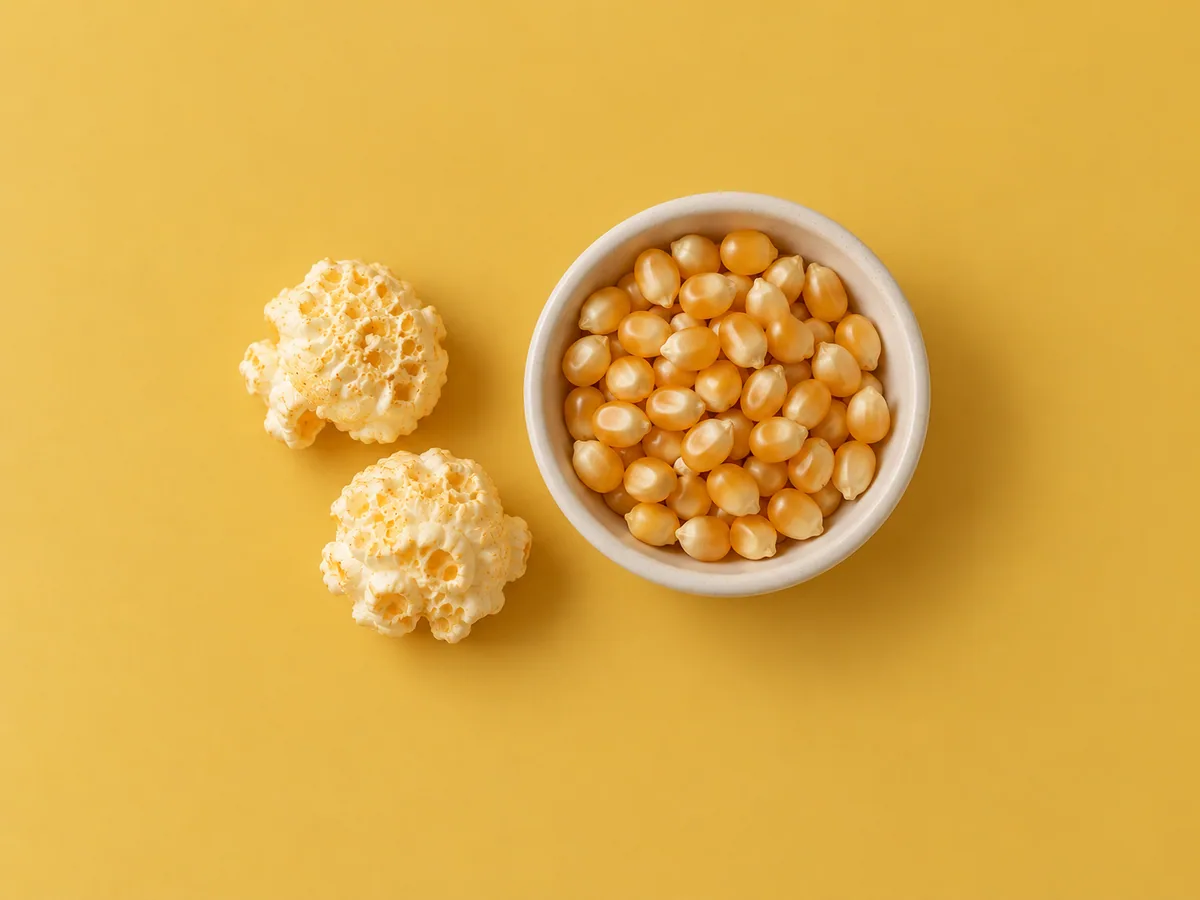
Popcorn names describe several different things. Mushroom and butterfly refer to popped shapes. White and yellow refer to kernel varieties. Air-popped and oil-popped describe preparation. Kettle corn, caramel corn and seasoned popcorn describe how the finished snack is made or flavored.
Those categories can overlap in one bag. You can have mushroom popcorn with a savory seasoning or a sweet coating. Knowing which question a label answers makes it much easier to choose the crunch you actually want.
Mushroom and butterfly: the two main popped shapes
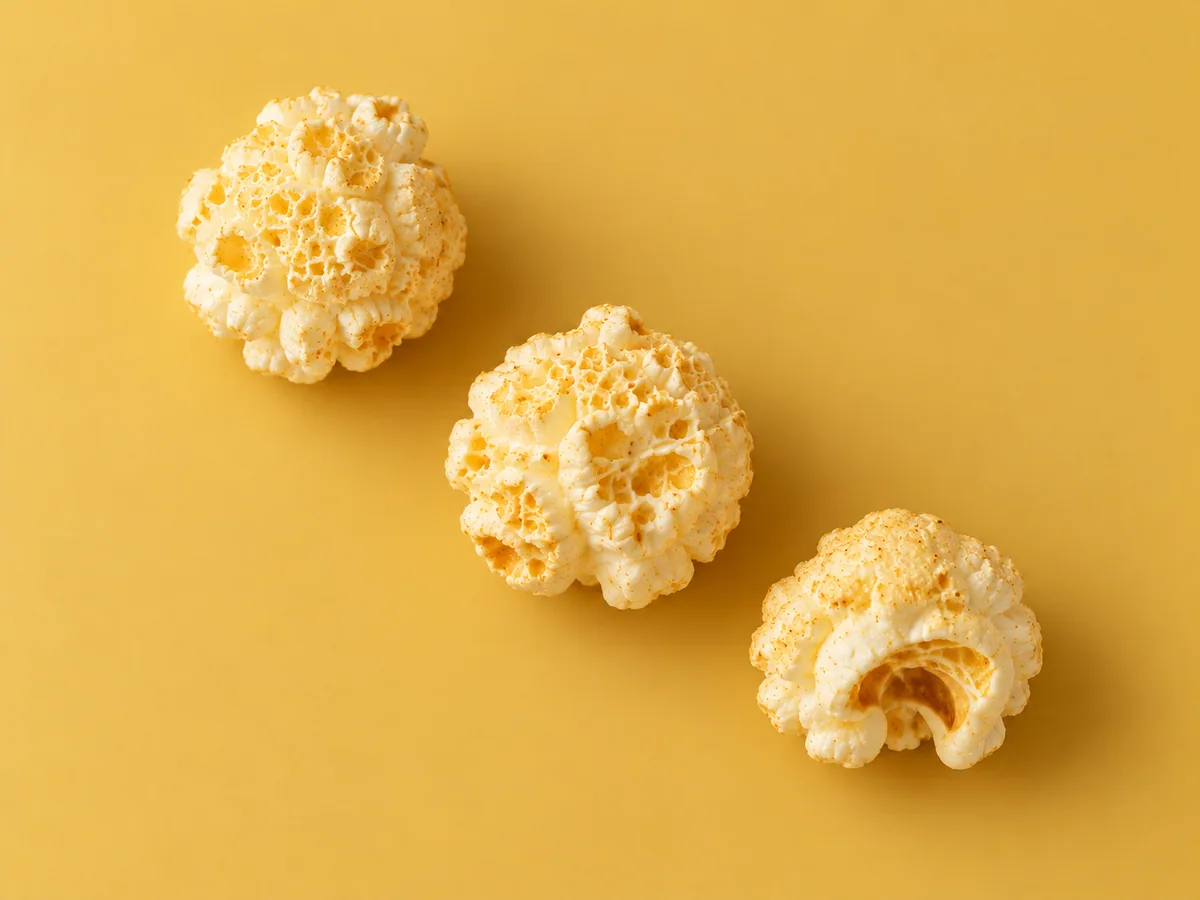
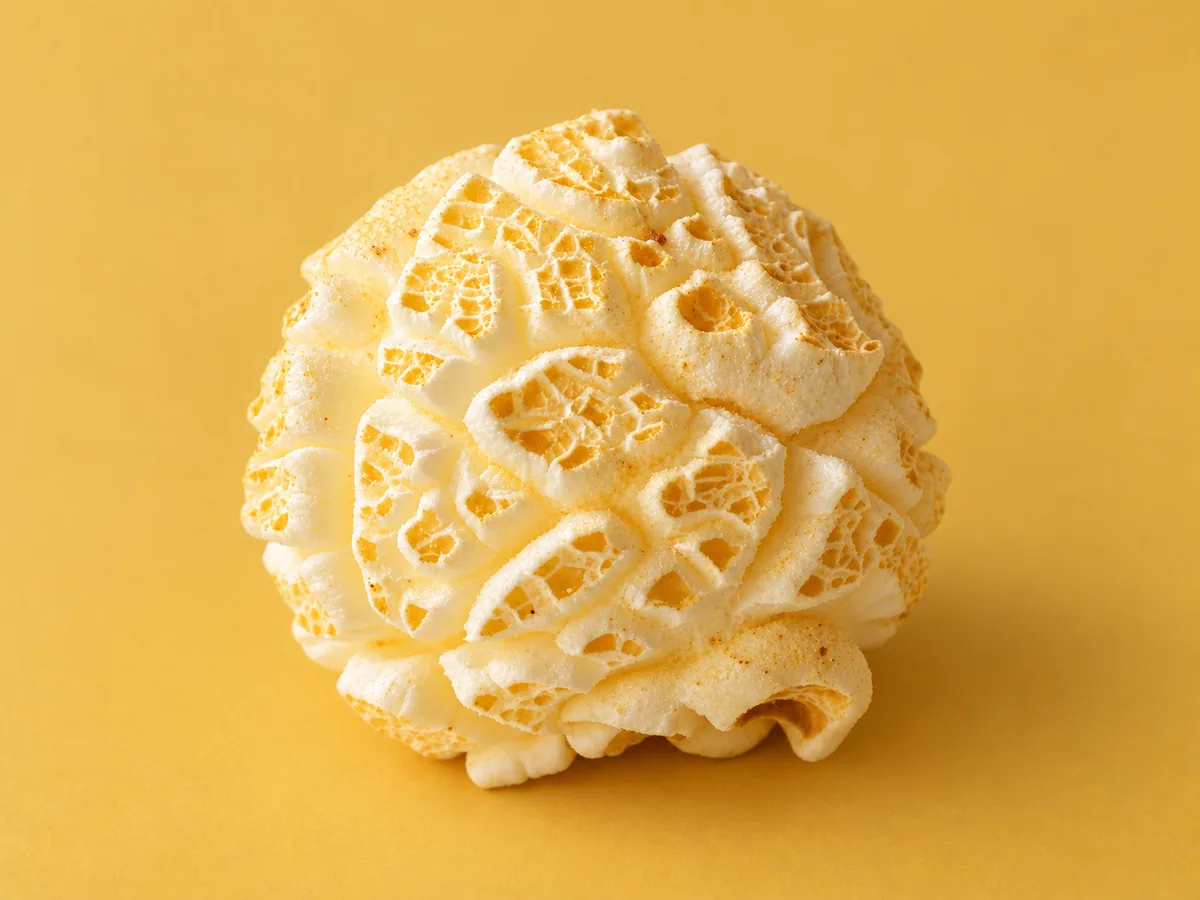
The Popcorn Board describes butterfly popcorn as irregular and delicate, with projecting pieces, and mushroom popcorn as a rounder form with a rough surface that tolerates stirring and coatings. Think about how you will handle the popcorn: a coating and a little mixing ask something different of it than a quick dusting in a bowl.
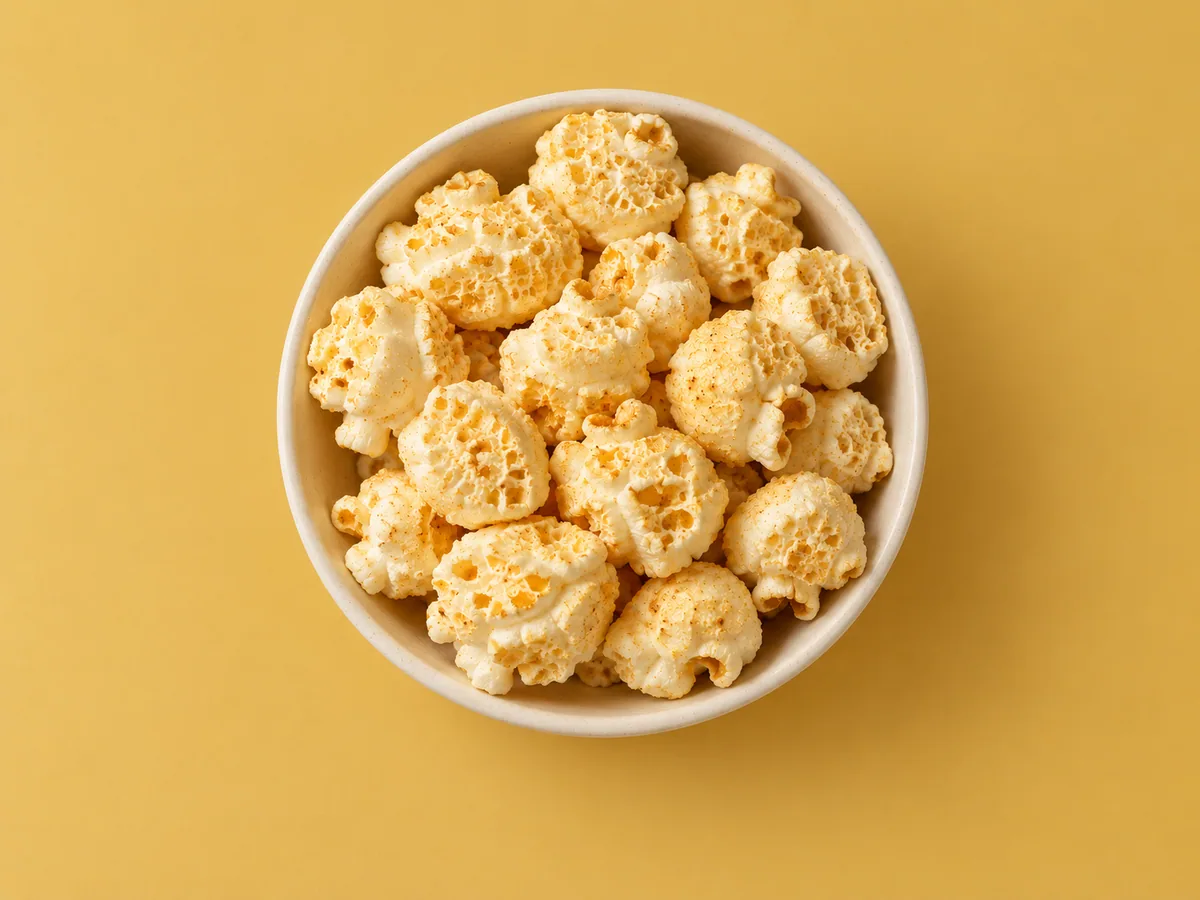
We use mushroom kernels for Chik’nPop. The round form suits our signature seasoning. That is a choice about the snack we want to make, rather than a claim that every other kind is wrong. Our mushroom vs. butterfly comparison takes a closer look.
| Label | What it describes | Useful when choosing |
|---|---|---|
| Mushroom | A compact, rounded popped shape | A base for coatings or seasoning |
| Butterfly / snowflake | An irregular popped shape with wings | A light, delicate bite |
| White / yellow | A kernel variety or color | Which raw kernels to try |
| Air-popped / oil-popped | The preparation method | How the popcorn is cooked |
| Kettle / caramel / seasoned | The finished preparation or flavor | What is going in your bowl |
White, yellow, and the colorful kernels in between
Kernel color and popped shape are separate characteristics. The Popcorn Board explains that the inner starch is white or yellow even when the outer hull is another color. A red or dark kernel therefore does not promise a bright red bowl after popping.
When comparing white and yellow varieties at home, use the same amount and the same method. Notice the size, bite and number of unpopped kernels. The supplier’s specific variety and your cooking setup are more useful guides than assuming color alone tells you everything about the result.
Air-popped, oil-popped, and microwave popcorn
These are preparation choices. Air popping uses hot air; stovetop methods commonly use oil; microwave products range from plain kernels in a suitable popper to prepared bags with their own oil and seasoning. Read the instructions for the product or equipment you are using.
“Microwave” does not identify one flavor or one nutrition profile. The same goes for “air-popped” once toppings have been added. If you are comparing finished snacks, compare their actual labels. Our popcorn shopping guide shows why equal serving weights matter.
Kettle corn, caramel corn, and seasoned popcorn
Kettle corn is commonly a sweet-and-salty preparation. Caramel corn has a cooked sugar coating. Seasoned popcorn can cover everything from a little spice to a generous savory coating. None of these names tells you the popped shape by itself.
For a savory snack, read beyond the flavor name. Look at the seasoning coverage in the product photos, the ingredient list, and whether you prefer an airy bite or a firmer coating. “Mushroom” on our bag tells you the shape; signature-seasoned tells you where we spent the rest of our attention.
One label worth questioning: hull-less
All popcorn needs a hull to pop. Some varieties leave less noticeable fragments, but “hull-less” is not a literal description of a kernel with no hull. Choose a texture you like without expecting any variety to make an absolute promise about getting stuck in your teeth.
If you want to explore the savory end of the popcorn aisle, start with a clear flavor description and a bag you can identify. Ours is Chik’nPop: bold umami, a little heat, a lotta crunch. Join the US launch waitlist while we get it ready.
Sources & further reading
Sources checked 2026-10-03. Product details can change; check the current package and manufacturer page.
- Popcorn Board: popped shapes and hulls
- Popcorn Board: kernel structure and colors
- Popcorn Board: comparing white and yellow popcorn
Something needs correcting? Tell us.